Klariqo Was a Voice AI Company. Here's Why We Became a Compliance Company
We built the AI that makes the calls. Then we watched operators drown in the calls they couldn't prove.

TL;DR
- Klariqo started as voice AI for VICIdial call centers. It worked, more than 100,000 calls in production across SSDI, ACA, Medicare, and debt relief.
- Running regulated outbound, we found the real problem: operators could make the call, but they couldn't prove what was said on it.
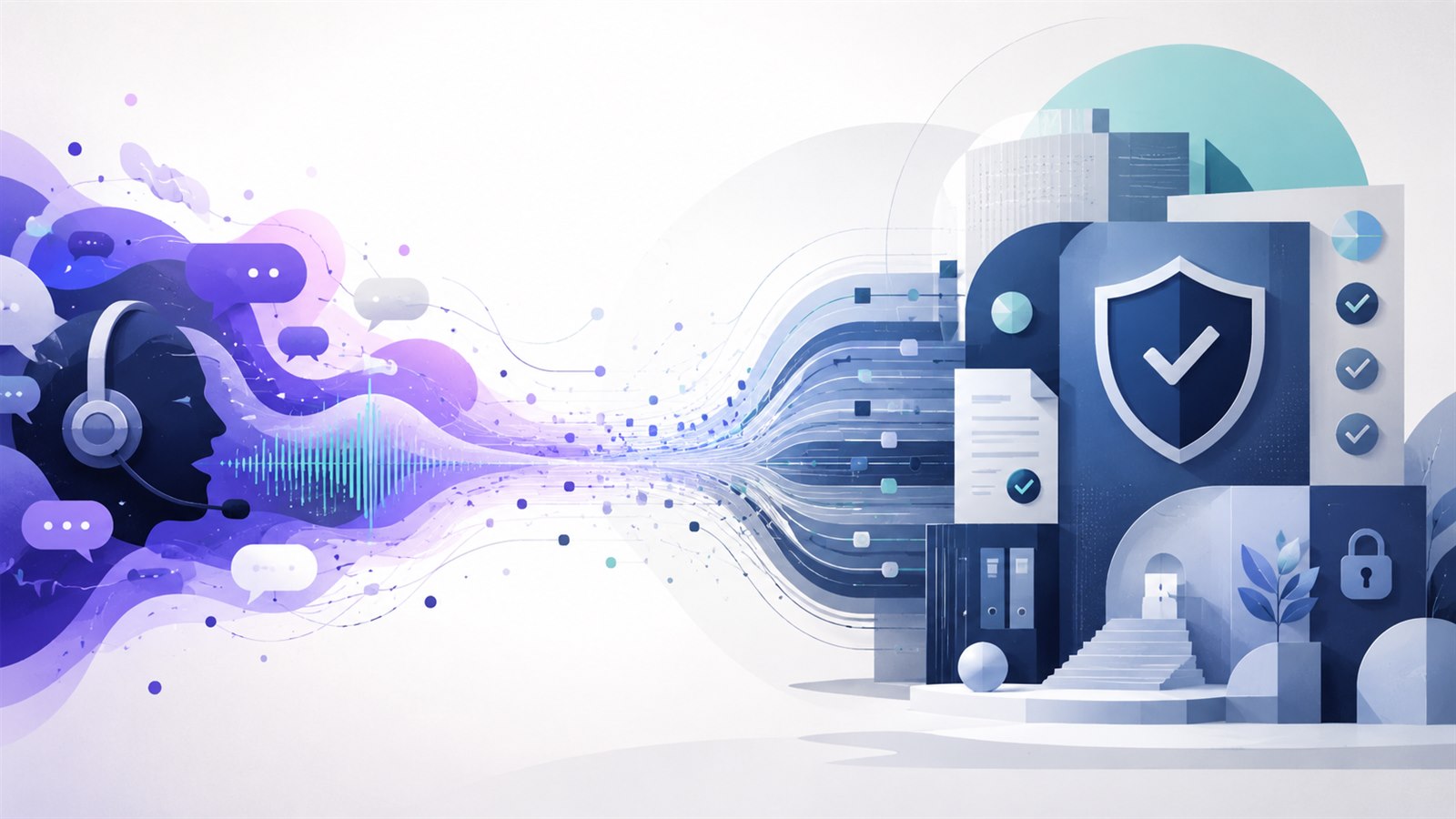
- So we became the compliance layer for call centers: QA on 100% of calls plus a signed, tamper-evident record you own and can verify yourself. The voice AI is still here, just the base layer now, not the headline.
Klariqo started in early 2026 as voice AI for call centers. Our AI agents registered on your VICIdial as a remote extension, qualified outbound calls, and warm-transferred the good ones to a human closer. It worked. We ran more than 100,000 calls in production across SSDI, ACA, Medicare, and debt relief.
Then we changed the whole company. Not the tech underneath, the headline on the door. Klariqo is now the compliance layer for call centers: we score 100% of your calls and seal each one into a signed record you own and can verify. Here's what we saw that made the change obvious.
Voice AI turned out to be the easy part
By early 2026, a dozen platforms could build a voice agent that sounds human and holds a conversation. Vapi, Retell, Bland, and a long tail behind them. We were one more, with a sharper integration story for VICIdial operators. Good business. Not a defensible one.
Building the agent was never the hard part for the operators we served. Making the call was solved. What kept coming up, in every vertical, on every renewal, was a different question: can you prove what actually happened on it?
The problem we watched operators hit, over and over
Run regulated outbound long enough and the pattern is the same everywhere. SSDI, ACA, Medicare, debt relief. The rules are strict, the plaintiff's bar is active, and one call can turn into a demand letter.
Here's the math that runs the industry. A single TCPA violation runs $500 to $1,500 in statutory damages. A missed opt-out. An off-script promise. A disclosure that never got read. And here's the part that keeps operators up at night: most call centers only QA about 2% of their calls. A human listens to a handful, scores them, and moves on. The other 98% is never heard by anyone, until a lawyer asks for it.
Put real numbers on it. A center running 50 agents on Medicare outbound might make 2,000 calls a day. At a 2% QA rate, that's 40 calls audited and 1,960 nobody ever hears. If three of those go off-script, that's up to $4,500 in exposure from a single afternoon, and six months later, when the complaint arrives, there's no verifiable evidence of what was actually said.
So when a demand letter lands, the operator goes to the recordings. And the recordings don't help nearly as much as everyone assumes.
A recording is not evidence
Here's what nobody tells you when you turn on call recording: a raw audio file proves almost nothing on its own. You can't show it wasn't edited. You can't prove when it happened. You can't prove the file the other side is holding is the same one you recorded. It's a memory, not a record.
That's the gap. Every call center is sitting on terabytes of recordings that feel like protection and aren't. Making more calls, with better AI, does nothing to close it. If anything it widens it, because now you're generating unprovable calls faster.
That was our realization. The unmet need in this market was never a better voice. It was proof.
Proving a call is harder than making one
This is why we changed the company instead of shipping a feature. Proof isn't a checkbox. To hand a regulated operator something that actually defends them, you need all of it at once:
- Every call scored, not a 2% sample, against the rules that operator writes.
- Each call sealed so that changing one word breaks the seal.
- A record the operator owns and can hand to a regulator, not a score locked inside our dashboard.
- A way for anyone to verify that record without trusting us.
None of that is voice AI. It's a different discipline. So we built it.
What Klariqo is now
Klariqo runs QA on 100% of your calls, AI or human, against the rules you define: what your agents must say, and must never say. Every call is then sealed into a signed, tamper-evident record built on the open vCon standard, with a SHA-512 fingerprint of the audio, a timestamp, and a digital signature.
Each record carries an independent RFC 3161 trusted timestamp, the standard behind legal e-signatures, so the moment it existed is fixed by an outside authority, not just our word. And any record can be dropped into a public verifier that confirms, in your browser, that it's intact and the signature holds. Nothing leaves your machine.
That's the whole shift in one line: we stopped selling the call and started selling the proof of the call.
We're careful about what that proof is. It's audit-ready evidence. It shows what was said, that the record wasn't altered, and when. It doesn't make you compliant, and we'll never tell you it does. The consent and the legal obligations stay yours. What we remove is the part where you can't prove your own side of the story.
The voice AI didn't go anywhere
Here's the part people expect to be the catch: we still run the voice agents. You can use Klariqo's own agents, or bring your own, on the dialer you already run. Every call, human or AI, lands on the same signed, scored record.
Voice AI is still in the product. It's just no longer the thing we lead with, because it's no longer the thing that's hard. The proof is.
What this means if you run regulated outbound
If you're shopping for another voice-AI vendor, you have a dozen good options and we're a fine one. But that's not the decision that protects you.
The decision that protects you is this: when a call gets disputed six months from now, do you dig through storage and hope the file holds up, or do you hand over a signed record that anyone can verify? Every call center runs on the first answer today. We built the second one.
That's why Klariqo is a compliance company now.
FAQ
Is Klariqo still a voice AI platform? Yes. We still run AI voice agents that register on VICIdial and other SIP dialers, and you can bring your own engine. The difference is that we now seal every call, AI or human, into a record you can prove.
Why did Klariqo move from voice AI to compliance? Because proof was the unmet need. Our customers could already make the call. What they couldn't do was prove what was said on it, on 100% of calls, in a way that holds up in a dispute. That's the harder problem, and the one worth building a company around.
Does Klariqo make my call center TCPA compliant? No, and any vendor who says they do is overselling you. Klariqo gives you audit-ready evidence: a signed, tamper-evident record of what was said on every call, independently timestamped and independently verifiable. Consent and your legal obligations stay yours. We prove your side; we don't erase the rules.
What is a signed call record, exactly? It's the call packaged into an open vCon file with a SHA-512 fingerprint of the audio, a digital signature, and an independent RFC 3161 trusted timestamp. Change one word of the transcript or one second of the audio and the fingerprint stops matching. Anyone can check it in the public verifier.
Do I have to replace my dialer or my voice AI to use this? No. Klariqo connects to VICIdial natively in about ten minutes, works alongside the dialer you already run, and scores your calls whether they're made by our AI, someone else's, or a human agent. You can even start with a record-based pilot: we score your existing recordings with no integration at all.
What happens to the voice AI customers you already had? Nothing breaks. The agents still run. Those calls now come with a signed record on top, which turned out to be the part that matters most.
See it yourself
Upload a call, get a signed record back, and verify it in your browser. No account, nothing leaves your machine.
Prove what was said on every call.
Turn one of your own calls into a signed, tamper-evident record you can verify yourself.